Why is this stone not a good choice for a kitchen worktop?
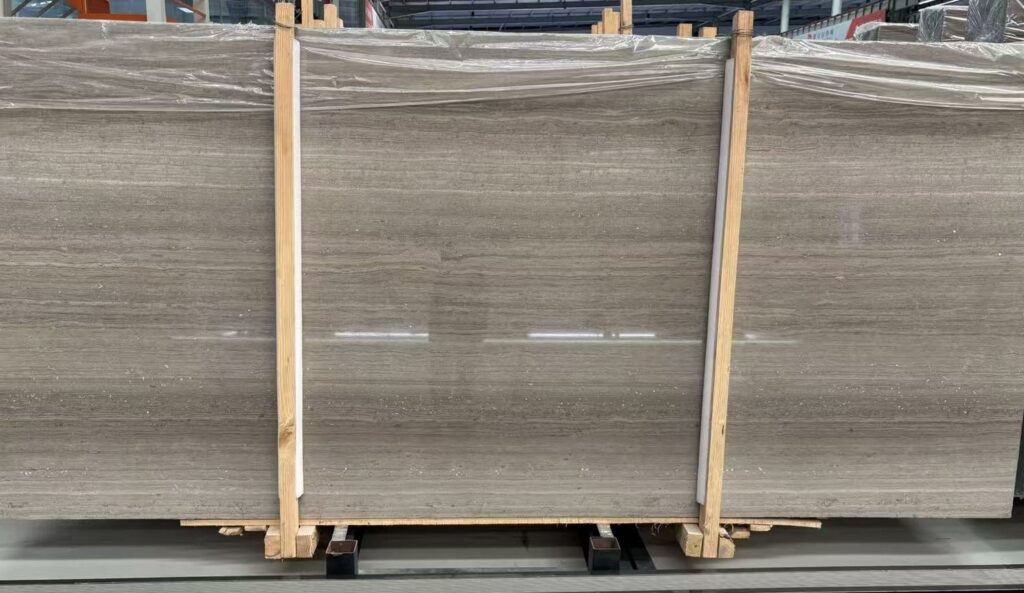
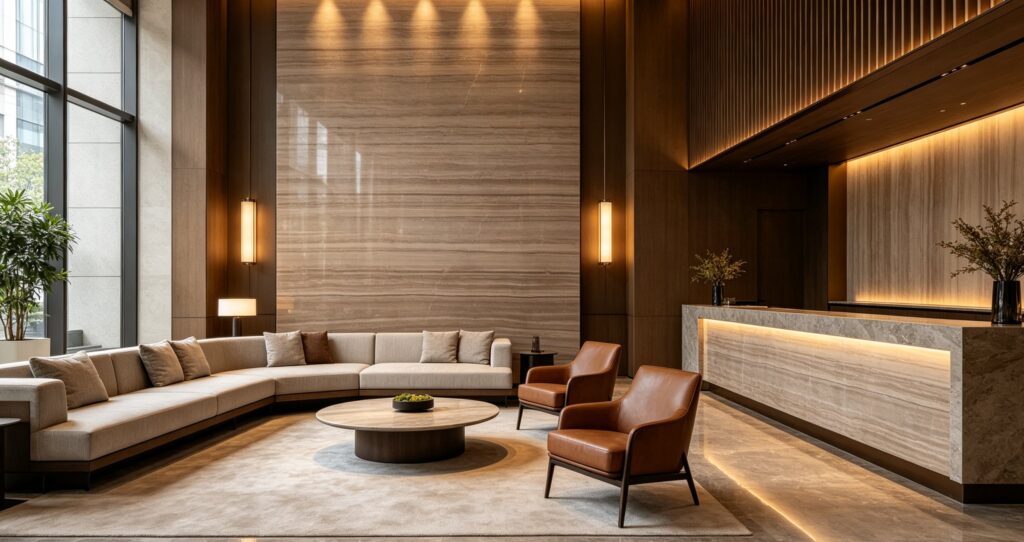
Reference photographs. They show the material and the finish; they are not photographs of goods we made, and the colour on screen is not a colour-match.
The figures, and where each one comes from
| What it does in a kitchen | What that means |
|---|---|
| Acids etch the surface | A dull mark that cannot be wiped off |
| Knives scratch a Mohs 3 stone | A cut is permanent |
| Heat shocks it | Thermal movement opens the resin bond at an edge |
Why it behaves the way it does
Etching is a chemical reaction, not a stain. A stain is something that soaked in and can be drawn out; an etch is a layer of calcite dissolved away, and no poultice or cleaner brings it back. That is the difference between a mark you can treat and a mark you can only polish.
What these figures are, and what they are not
We supply slabs, cut-to-size and panels. We do not supply kitchen worktop fabrication, and the care regime for a worktop is not the same as for a floor.
If you are specifying this
We have not published products against this question yet. Send us the process, thickness and quantity and we will quote it against what we can actually form, rather than against a catalogue.
Because it is marble and it etches. Citrus, wine, tomato and vinegar attack the calcite surface, and the mark is a loss of polish rather than a stain, which means it has to be re-polished rather than cleaned off. It works in a kitchen if the client accepts that.
The figures
| What it does in a kitchen | What that means |
|---|---|
| Acids etch the surface | A dull mark that cannot be wiped off |
| Knives scratch a Mohs 3 stone | A cut is permanent |
| Heat shocks it | Thermal movement opens the resin bond at an edge |
Why
Etching is a chemical reaction, not a stain. A stain is something that soaked in and can be drawn out; an etch is a layer of calcite dissolved away, and no poultice or cleaner brings it back. That is the difference between a mark you can treat and a mark you can only polish.
What these figures are, and what they are not
We supply slabs, cut-to-size and panels. We do not supply kitchen worktop fabrication, and the care regime for a worktop is not the same as for a floor.