Which countries have a comparable wood-grain marble?
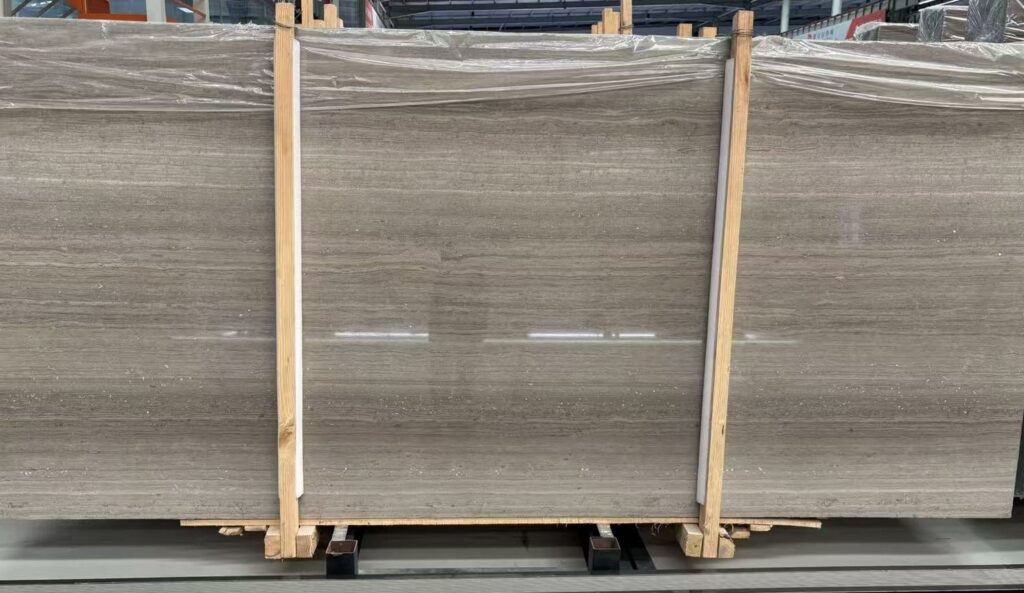

Reference photographs. They show the material and the finish; they are not photographs of goods we made, and the colour on screen is not a colour-match.
The figures, and where each one comes from
| Alternative | What it is | How it compares |
|---|---|---|
| Turkish wood-grain marble | A different rock with a similar figure | Different density, absorption and strength; compare the numbers |
| Italian grey-veined marble | A calcitic marble with parallel banding | Comparable in composition, different in figure |
| Indian wood-grain lines | Marketed for the same look | Figures vary by seller more than by origin |
| Quartzite sold as wood grain | Not marble at all | Resists acid and does not etch |
Why it behaves the way it does
The look is reproducible and the rock is not, which is why the market needs the block number. A buyer who specifies this stone by its picture will receive a stone they have to test, and the test is cheaper to do before the order.
What these figures are, and what they are not
We publish our own figures. We do not publish figures for any other supplier's stone, and we cannot identify a sample of another material from a photograph.
If you are specifying this
We have not published products against this question yet. Send us the process, thickness and quantity and we will quote it against what we can actually form, rather than against a catalogue.
Several: Turkish wood-grain marbles, Italian grey-veined marbles and Indian lines all copy the look. They are different rocks with different numbers. The point of comparison is not the appearance but the figures and the bed.
The figures
| Alternative | What it is | How it compares |
|---|---|---|
| Turkish wood-grain marble | A different rock with a similar figure | Different density, absorption and strength; compare the numbers |
| Italian grey-veined marble | A calcitic marble with parallel banding | Comparable in composition, different in figure |
| Indian wood-grain lines | Marketed for the same look | Figures vary by seller more than by origin |
| Quartzite sold as wood grain | Not marble at all | Resists acid and does not etch |
Why
The look is reproducible and the rock is not, which is why the market needs the block number. A buyer who specifies this stone by its picture will receive a stone they have to test, and the test is cheaper to do before the order.
What these figures are, and what they are not
We publish our own figures. We do not publish figures for any other supplier’s stone, and we cannot identify a sample of another material from a photograph.