Why is straight figure better than a dramatic figure?
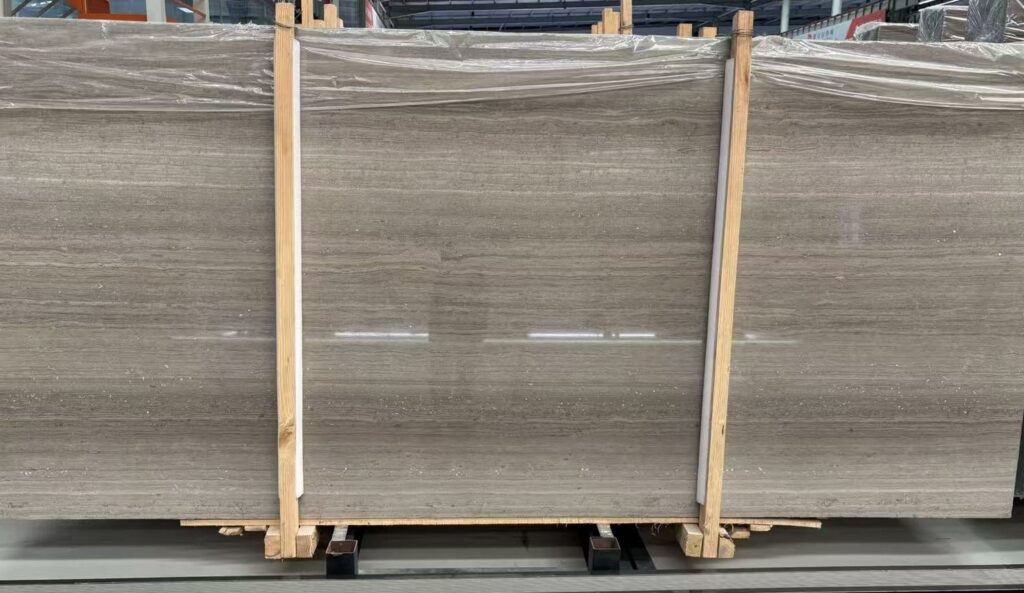
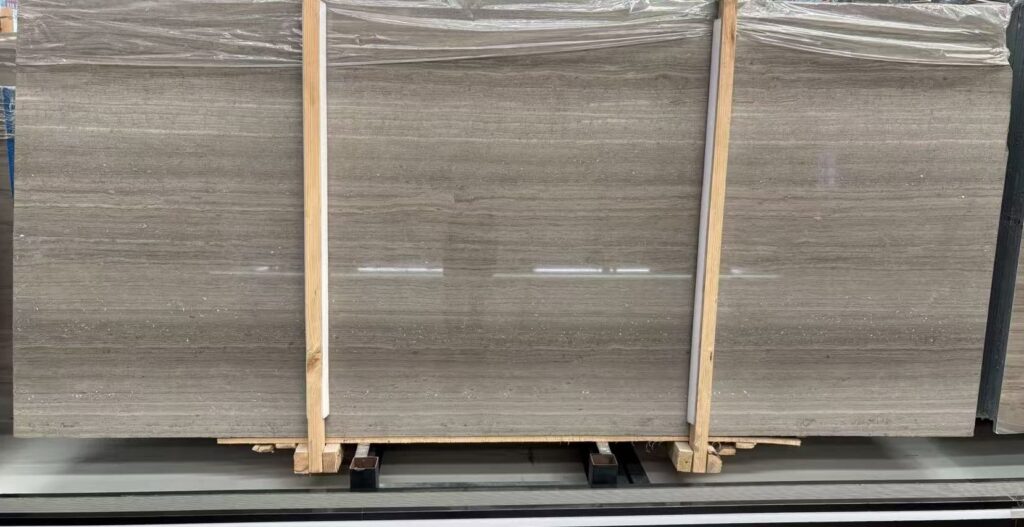
Reference photographs. They show the material and the finish; they are not photographs of goods we made, and the colour on screen is not a colour-match.
The figures, and where each one comes from
| Figure type | How it reads over a large run | What it asks of the buyer |
|---|---|---|
| Straight parallel lines | Quiet, continuous, wood-like | Decide the direction once |
| Cloud-like open figure | A picture, and it repeats badly | Book-match every joint |
| High-contrast veining | A feature that competes with the room | Accept it as a focal point |
Why it behaves the way it does
The comparison that matters is with wood, not with other marbles. A client who wants a timber look is buying the continuity, and continuity is what a straight line gives and a swirl does not. The price difference between them in this bed is small, which is why the specification is worth getting right rather than the sample.
What these figures are, and what they are not
We do not publish a figure grade, because a grade would be a judgement we cannot back with a number. What we publish is the bed, the cut direction and the block.
If you are specifying this
We have not published products against this question yet. Send us the process, thickness and quantity and we will quote it against what we can actually form, rather than against a catalogue.
Because a straight figure repeats without announcing it. A dramatic figure is judged as a feature and dates when the room is refitted; a straight figure reads as a material and is still there in ten years. It is the reason a wood-grain stone exists.
The figures
| Figure type | How it reads over a large run | What it asks of the buyer |
|---|---|---|
| Straight parallel lines | Quiet, continuous, wood-like | Decide the direction once |
| Cloud-like open figure | A picture, and it repeats badly | Book-match every joint |
| High-contrast veining | A feature that competes with the room | Accept it as a focal point |
Why
The comparison that matters is with wood, not with other marbles. A client who wants a timber look is buying the continuity, and continuity is what a straight line gives and a swirl does not. The price difference between them in this bed is small, which is why the specification is worth getting right rather than the sample.
What these figures are, and what they are not
We do not publish a figure grade, because a grade would be a judgement we cannot back with a number. What we publish is the bed, the cut direction and the block.