Does Coffee Wood Marble need to be sealed?
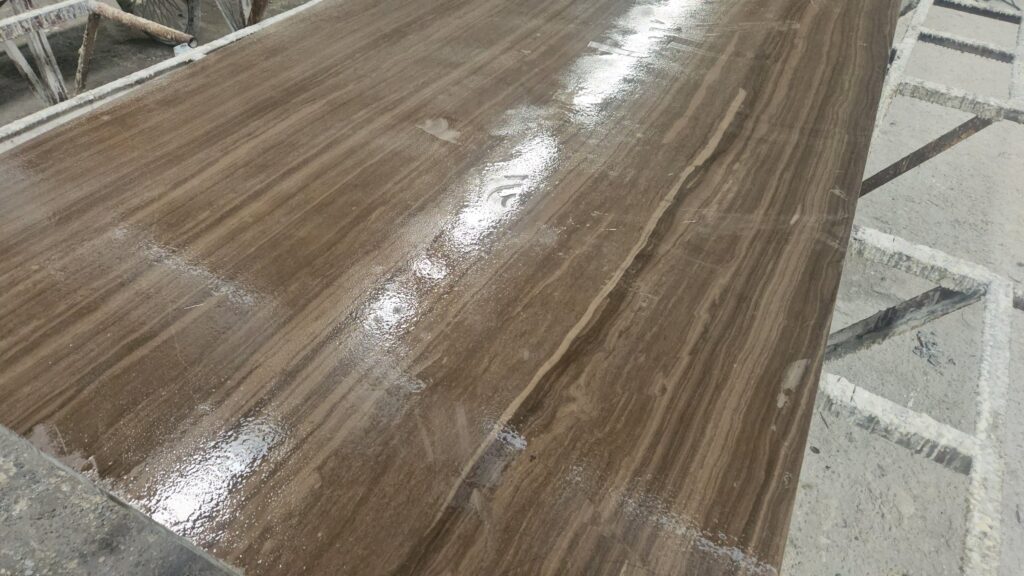
Reference photographs. They show the material and the finish; they are not photographs of goods we made, and the colour on screen is not a colour-match.
The figures, and where each one comes from
| Where | Sealing |
|---|---|
| A floor or a corridor | Yes, and on a schedule |
| A wet room | Yes, and more often than a dry room |
| A counter | Yes, and the sealer has to be food-safe |
| A wall | Watch it, and the decision is about the finish |
| What sealing does | Slows absorption and reduces staining |
| What sealing does not do | Stop an acid etching the surface |
Why it behaves the way it does
A penetrating sealer works in the pores and an etch happens on the surface, so the two are unrelated. People seal because they want the stone to survive a kitchen, and then they wonder why the lemon juice still marked it — the answer is that sealing was never what stopped it.
What these figures are, and what they are not
The intervals below are general guidance for calcareous stone in ordinary use. The right interval for a specific floor is a question about that floor, and the sealer's own manufacturer has the answer for the product.
If you are specifying this
We have not published products against this question yet. Send us the process, thickness and quantity and we will quote it against what we can actually form, rather than against a catalogue.
On a floor, a wet room or a counter, yes: an impregnating sealer, on a schedule. It slows a spill getting into the pores and it makes the stone more stain-resistant. It does not make the stone acid-proof, and nothing does.
The figures
| Where | Sealing |
|---|---|
| A floor or a corridor | Yes, and on a schedule |
| A wet room | Yes, and more often than a dry room |
| A counter | Yes, and the sealer has to be food-safe |
| A wall | Watch it, and the decision is about the finish |
| What sealing does | Slows absorption and reduces staining |
| What sealing does not do | Stop an acid etching the surface |
Why
A penetrating sealer works in the pores and an etch happens on the surface, so the two are unrelated. People seal because they want the stone to survive a kitchen, and then they wonder why the lemon juice still marked it — the answer is that sealing was never what stopped it.
What these figures are, and what they are not
The intervals below are general guidance for calcareous stone in ordinary use. The right interval for a specific floor is a question about that floor, and the sealer’s own manufacturer has the answer for the product.