How do I remove a coffee or wine stain from Coffee Wood Marble?
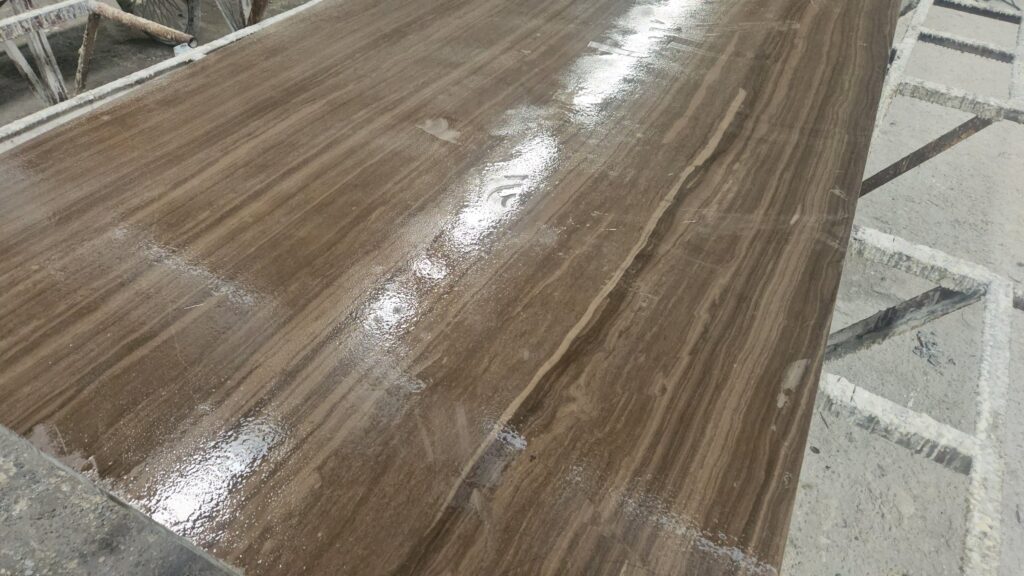

Reference photographs. They show the material and the finish; they are not photographs of goods we made, and the colour on screen is not a colour-match.
The figures, and where each one comes from
| The stain | Treatment |
|---|---|
| Fresh coffee or wine | Blot it, then a poultice |
| Old coffee or tea | A poultice with 12% hydrogen peroxide and a powdered absorbent |
| Wine on a honed floor | A poultice, and expect to repeat it |
| The one that will not come out | Some stains never do completely, and the poultice may have to be repeated |
Why it behaves the way it does
An organic stain is a pigment that went into the pores, and a poultice draws it back out into the absorbent. That is a different mechanism from an etch, which no poultice touches, and the two are confused so often that the wrong treatment gets used and then the mark is blamed on the stone.
What these figures are, and what they are not
A poultice is left on for 24 to 48 hours and may have to be repeated, and some stains will never come out completely. This is general guidance for a calcareous stone and a specific surface may need a stone professional's advice.
If you are specifying this
We have not published products against this question yet. Send us the process, thickness and quantity and we will quote it against what we can actually form, rather than against a catalogue.
With a poultice: a powdered absorbent and 12 per cent hydrogen peroxide, left on for 24 to 48 hours under plastic. Coffee and wine are organic stains, which means they went in and can be drawn out — unlike an etch, which is the surface gone.
The figures
| The stain | Treatment |
|---|---|
| Fresh coffee or wine | Blot it, then a poultice |
| Old coffee or tea | A poultice with 12% hydrogen peroxide and a powdered absorbent |
| Wine on a honed floor | A poultice, and expect to repeat it |
| The one that will not come out | Some stains never do completely, and the poultice may have to be repeated |
Why
An organic stain is a pigment that went into the pores, and a poultice draws it back out into the absorbent. That is a different mechanism from an etch, which no poultice touches, and the two are confused so often that the wrong treatment gets used and then the mark is blamed on the stone.
What these figures are, and what they are not
A poultice is left on for 24 to 48 hours and may have to be repeated, and some stains will never come out completely. This is general guidance for a calcareous stone and a specific surface may need a stone professional’s advice.