How do I get a consistent colour across a whole order?
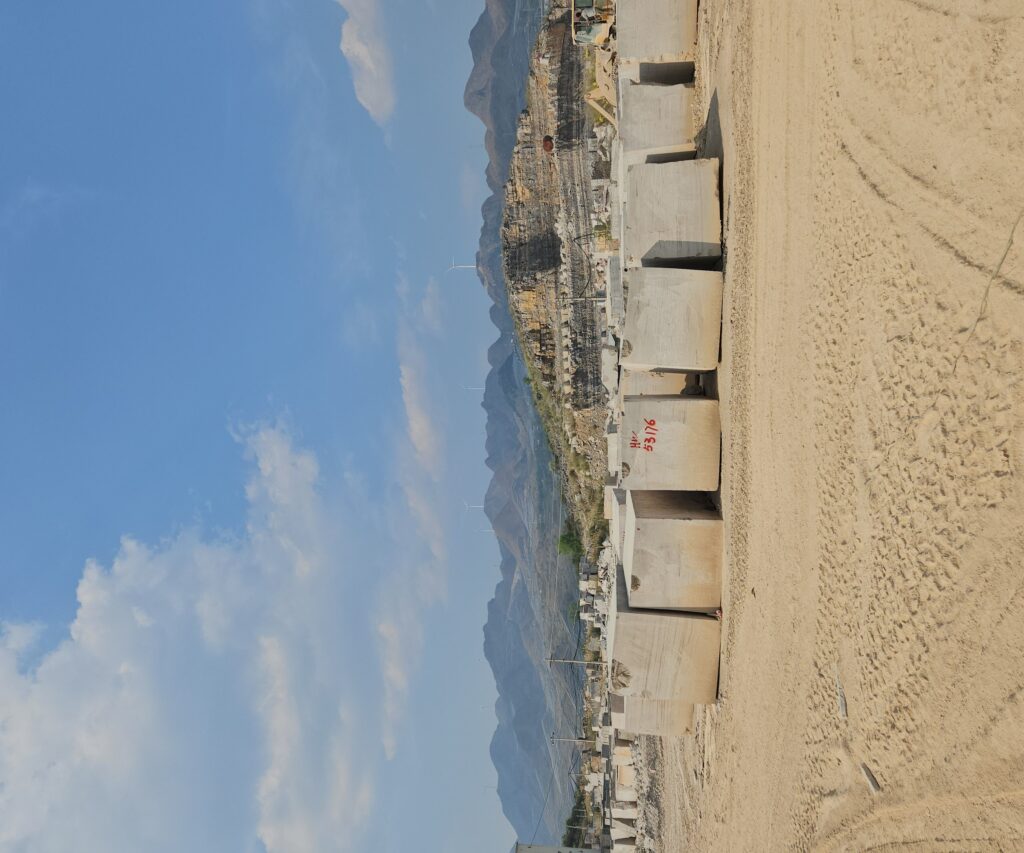


Reference photographs. They show the material and the finish; they are not photographs of goods we made, and the colour on screen is not a colour-match.
The figures, and where each one comes from
| The method | What it costs | What it gets |
|---|---|---|
| One block, graded and sequenced | One block for the order | Same figure and a close tone across the whole surface |
| Several blocks, hand-picked and sequenced | More blocks, more sorting | The figure runs from one to the next, the tone is close |
| Whatever is available | Lowest price first | Whatever the yard holds |
Why it behaves the way it does
The difference between a wall and a set of panels is not the stone and it is not the polish — it is that somebody chose the slabs for it. That work happens at the saw, and it is why a wall ordered as a sequence costs more than the same wall ordered as stock.
What these figures are, and what they are not
We grade and sequence by hand, and we will send photographs of the actual slabs before cutting. We cannot promise a tone match between two separate orders weeks apart.
If you are specifying this
We have not published products against this question yet. Send us the process, thickness and quantity and we will quote it against what we can actually form, rather than against a catalogue.
Order from one block, and grade it before cutting. Colour in this stone varies across a bed and across a block, and the only way to hold a consistent tone across a surface is to choose the slabs for it, in the same block, before anything is cut.
The figures
| The method | What it costs | What it gets |
|---|---|---|
| One block, graded and sequenced | One block for the order | Same figure and a close tone across the whole surface |
| Several blocks, hand-picked and sequenced | More blocks, more sorting | The figure runs from one to the next, the tone is close |
| Whatever is available | Lowest price first | Whatever the yard holds |
Why
The difference between a wall and a set of panels is not the stone and it is not the polish — it is that somebody chose the slabs for it. That work happens at the saw, and it is why a wall ordered as a sequence costs more than the same wall ordered as stock.
What these figures are, and what they are not
We grade and sequence by hand, and we will send photographs of the actual slabs before cutting. We cannot promise a tone match between two separate orders weeks apart.