Who specifies wood-grain marble for a project?
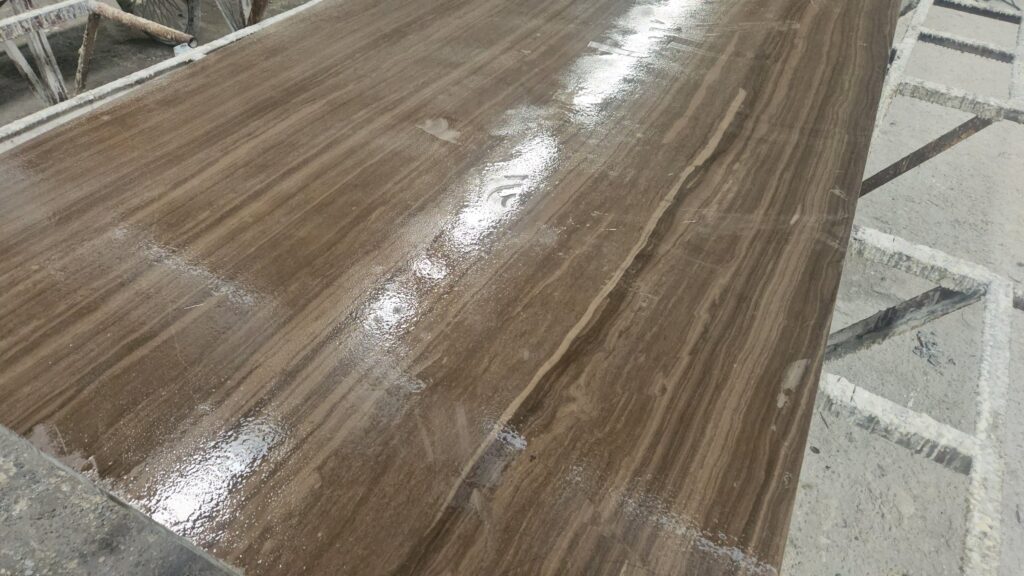

Reference photographs. They show the material and the finish; they are not photographs of goods we made, and the colour on screen is not a colour-match.
The figures, and where each one comes from
| Who | What they decide | What they should write |
|---|---|---|
| Architect | The look, the figure, the orientation of the grain | The form, the finish, and that the figure is to run in a named direction |
| Designer or engineer | Thickness, fixing, tolerance | The thickness, the tolerance, the substrate and the panel size |
| Contractor | The quantity and the delivery date | The block number and the port of loading |
Why it behaves the way it does
A specification that names a colour instead of a block will be met by whatever is available, and the buyer then has a legitimate dispute with a supplier who has done nothing wrong. The block number is the cheapest insurance in the whole transaction.
What these figures are, and what they are not
We can supply a specification support sheet and we can quote against a written specification. We cannot write the specification for a project we have not seen.
If you are specifying this
We have not published products against this question yet. Send us the process, thickness and quantity and we will quote it against what we can actually form, rather than against a catalogue.
The architect decides the look, the interior designer or the project engineer writes the specification, and the contractor buys it. In most projects the specification names a stone and a finish, and the block is chosen by whoever supplies it.
The figures
| Who | What they decide | What they should write |
|---|---|---|
| Architect | The look, the figure, the orientation of the grain | The form, the finish, and that the figure is to run in a named direction |
| Designer or engineer | Thickness, fixing, tolerance | The thickness, the tolerance, the substrate and the panel size |
| Contractor | The quantity and the delivery date | The block number and the port of loading |
Why
A specification that names a colour instead of a block will be met by whatever is available, and the buyer then has a legitimate dispute with a supplier who has done nothing wrong. The block number is the cheapest insurance in the whole transaction.
What these figures are, and what they are not
We can supply a specification support sheet and we can quote against a written specification. We cannot write the specification for a project we have not seen.