Why does a wood-grain marble need a different substrate?
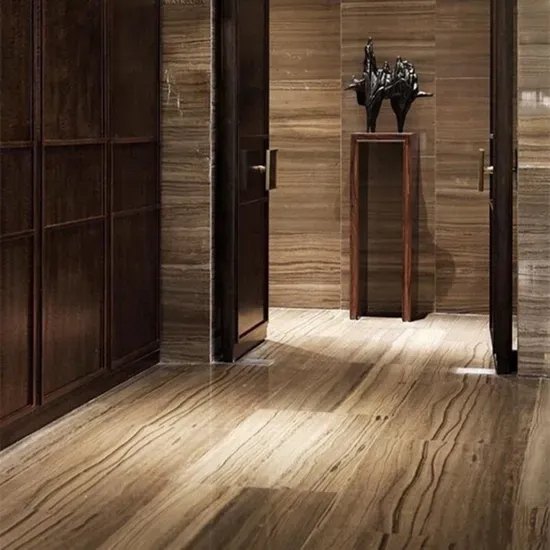
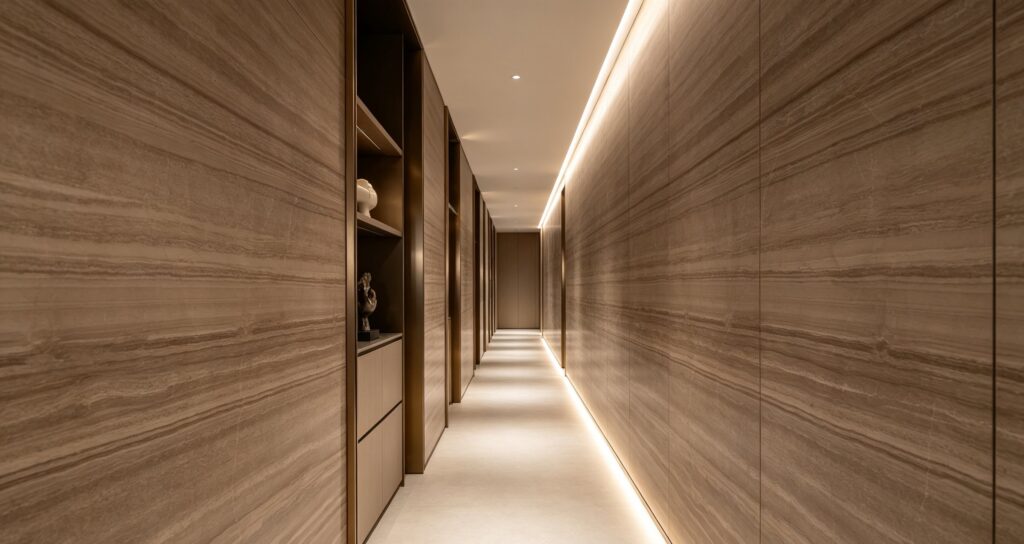
Reference photographs. They show the material and the finish; they are not photographs of goods we made, and the colour on screen is not a colour-match.
The figures, and where each one comes from
| What the substrate must do | Why |
|---|---|
| Be flat to the tolerance of the fixing system | A stone does not bed on a dip |
| Carry the wet load of the stone | Dry fixing puts the panel on the adhesive, not the wall |
| Allow the structure to move without racking the stone | Panels are rigid and the frame is not |
Why it behaves the way it does
A timber wall moves with humidity, and a marble wall does not, so a marble wall has to be detailed differently rather than installed better. The panel is the stiffest thing in the wall and the movement has to pass behind it.
What these figures are, and what they are not
We supply the stone. We do not supply a structural fixing design, and this page does not replace a project engineer's detail for a specific wall.
If you are specifying this
We have not published products against this question yet. Send us the process, thickness and quantity and we will quote it against what we can actually form, rather than against a catalogue.
Because this stone is heavy and rigid and does not flex, so it takes the movement of the building rather than absorbing it. The substrate has to be flat enough for the back of the slab to bed, and the fixing has to allow the panel to move without the stone cracking.
The figures
| What the substrate must do | Why |
|---|---|
| Be flat to the tolerance of the fixing system | A stone does not bed on a dip |
| Carry the wet load of the stone | Dry fixing puts the panel on the adhesive, not the wall |
| Allow the structure to move without racking the stone | Panels are rigid and the frame is not |
Why
A timber wall moves with humidity, and a marble wall does not, so a marble wall has to be detailed differently rather than installed better. The panel is the stiffest thing in the wall and the movement has to pass behind it.
What these figures are, and what they are not
We supply the stone. We do not supply a structural fixing design, and this page does not replace a project engineer’s detail for a specific wall.