How do I use Coffee Wood Marble for a staircase?
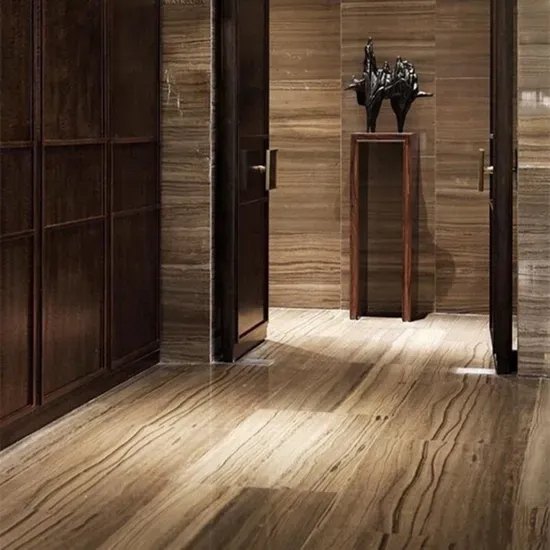
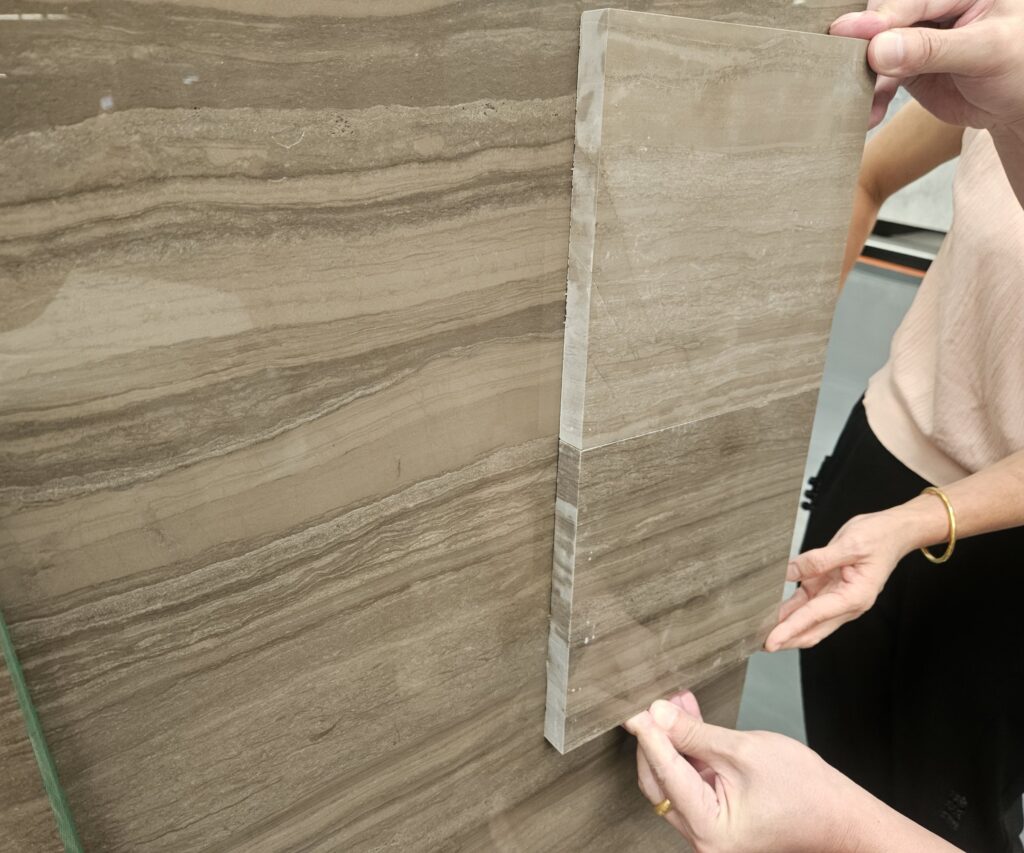
Reference photographs. They show the material and the finish; they are not photographs of goods we made, and the colour on screen is not a colour-match.
The figures, and where each one comes from
| The element | What it needs |
|---|---|
| The tread | Cut in one piece, with the nosing part of the same slab |
| The thickness | 30 mm where the edge is seen, and 20 mm where it is not |
| The figure | The lines running with the travel of the stair |
| The substrate | Level, and it carries the load |
Why it behaves the way it does
The nosing is the part that wears first and the part that shows a joint if it is made in two pieces. On a straight figure the nosing joint is a horizontal line across a surface whose lines all run the other way, and it is the first thing anyone looks at.
What these figures are, and what they are not
We supply the treads and the risers cut to size. The structure, the support and the installation are the fabricator's and the builder's.
If you are specifying this
We have not published products against this question yet. Send us the process, thickness and quantity and we will quote it against what we can actually form, rather than against a catalogue.
On full-thickness treads with a nosing that is cut as one piece, not applied. A stair is the hardest-wearing horizontal surface in a building and the part that is most often cut from a thin piece with a nosing added to it.
The figures
| The element | What it needs |
|---|---|
| The tread | Cut in one piece, with the nosing part of the same slab |
| The thickness | 30 mm where the edge is seen, and 20 mm where it is not |
| The figure | The lines running with the travel of the stair |
| The substrate | Level, and it carries the load |
Why
The nosing is the part that wears first and the part that shows a joint if it is made in two pieces. On a straight figure the nosing joint is a horizontal line across a surface whose lines all run the other way, and it is the first thing anyone looks at.
What these figures are, and what they are not
We supply the treads and the risers cut to size. The structure, the support and the installation are the fabricator’s and the builder’s.