Can Coffee Wood Marble be cut into a staircase with a mitred edge?
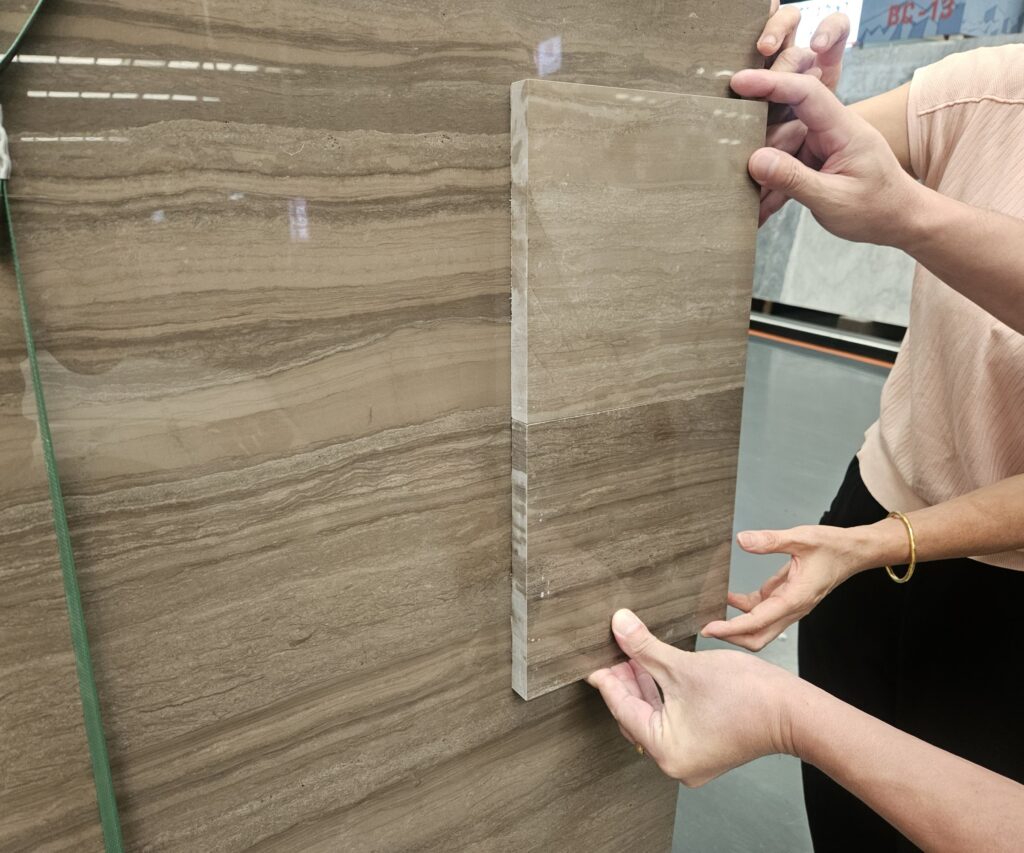
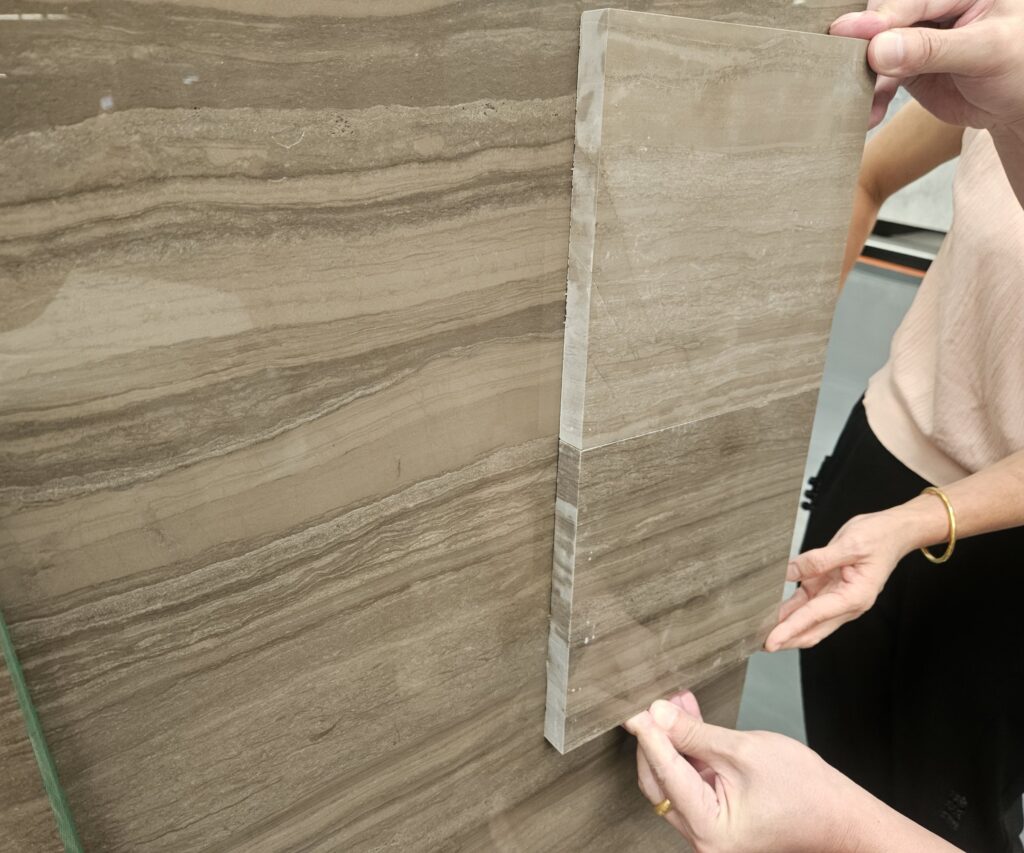
Reference photographs. They show the material and the finish; they are not photographs of goods we made, and the colour on screen is not a colour-match.
The figures, and where each one comes from
| The detail | What it needs |
|---|---|
| The mitre | Cut so the figure continues around the nose, not a chevron |
| The tread | Full thickness, 30 mm where the edge is seen |
| The support | Level, and it carries the load |
| The finish | Honed on a stair, because a polished tread is the wrong surface |
Why it behaves the way it does
A mitre is the only place in a stone job where two pieces of the same board have to agree across a line. On a dramatic figure the chevron is obvious; on a straight figure it is a mismatch in line direction, which is quieter and which people notice and cannot name.
What these figures are, and what they are not
We supply the treads and risers cut to size. The structure, the support and the fixing are the fabricator's and the builder's.
If you are specifying this
We have not published products against this question yet. Send us the process, thickness and quantity and we will quote it against what we can actually form, rather than against a catalogue.
A mitred nosing is a fabrication decision and it is the one place where the stone decides: a mitre is two pieces of the same board meeting at an angle, and on a straight figure it has to be cut so that the lines continue around the corner rather than meeting in a chevron.
The figures
| The detail | What it needs |
|---|---|
| The mitre | Cut so the figure continues around the nose, not a chevron |
| The tread | Full thickness, 30 mm where the edge is seen |
| The support | Level, and it carries the load |
| The finish | Honed on a stair, because a polished tread is the wrong surface |
Why
A mitre is the only place in a stone job where two pieces of the same board have to agree across a line. On a dramatic figure the chevron is obvious; on a straight figure it is a mismatch in line direction, which is quieter and which people notice and cannot name.
What these figures are, and what they are not
We supply the treads and risers cut to size. The structure, the support and the fixing are the fabricator’s and the builder’s.