Does Coffee Wood Marble need to be book-matched or can it be laid random?
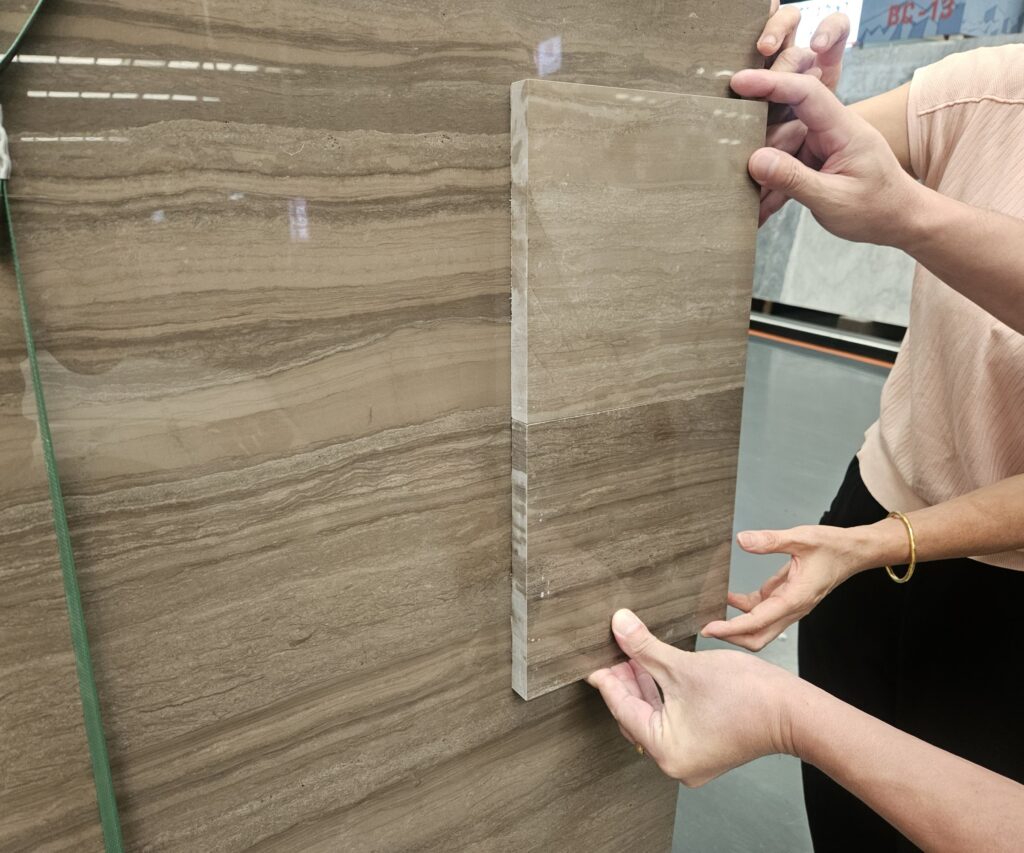
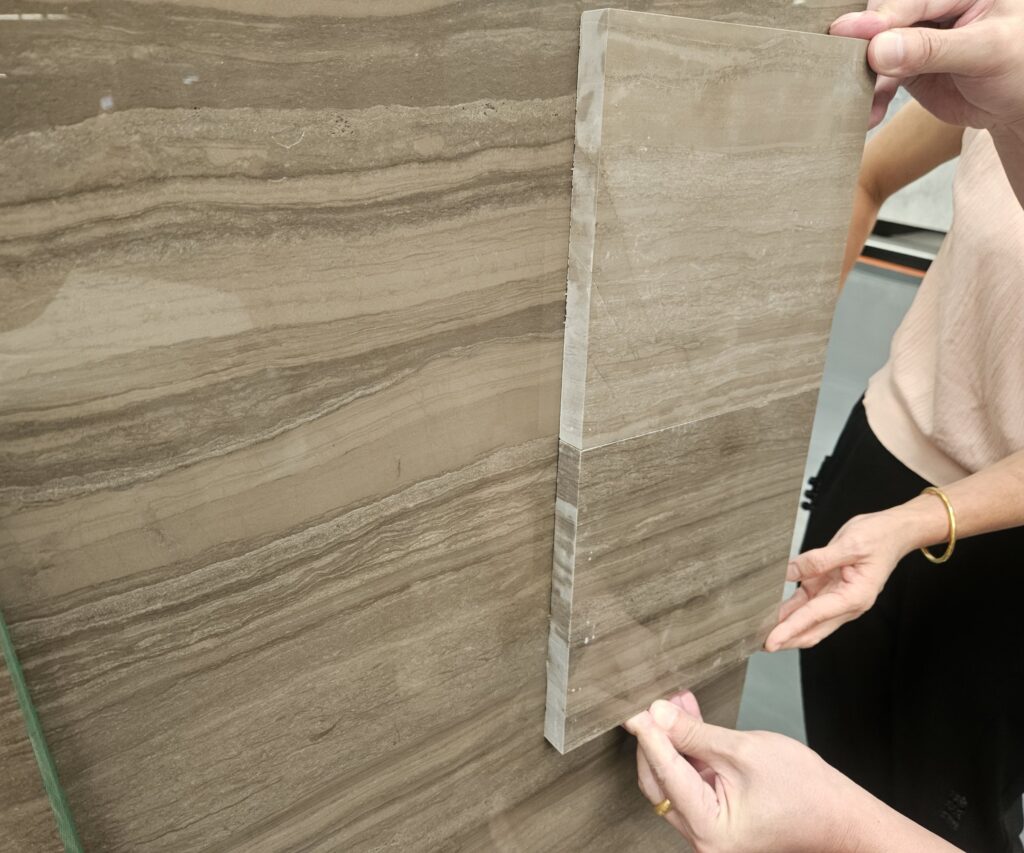
Reference photographs. They show the material and the finish; they are not photographs of goods we made, and the colour on screen is not a colour-match.
The figures, and where each one comes from
| The surface | How it is laid |
|---|---|
| A feature wall | Book-matched, and the layout chosen on paper |
| A lobby floor | Random or in courses, and the figure runs along the room |
| A small floor | Tile in a grid, and the joints run with the format |
| A one-off object | Cross-cut or matched to a drawing |
Why it behaves the way it does
On a straight figure a random floor reads as a continuous field, and a book-match on a floor would put a mirror line across it that nobody asked for. On a feature wall the mirror is the whole effect, and leaving it out would waste the best figure in the block.
What these figures are, and what they are not
This is a layout decision and the drawing settles it. What we do is cut the panels in the order the drawing gives, and number them so that they go up as drawn.
If you are specifying this
We have not published products against this question yet. Send us the process, thickness and quantity and we will quote it against what we can actually form, rather than against a catalogue.
Both are done and the choice is about the room. Book-matched on a feature wall, where the symmetry is the point. Laid random on a floor, where the straight figure repeats anyway and a book-match on a floor would draw a grid the eye follows.
The figures
| The surface | How it is laid |
|---|---|
| A feature wall | Book-matched, and the layout chosen on paper |
| A lobby floor | Random or in courses, and the figure runs along the room |
| A small floor | Tile in a grid, and the joints run with the format |
| A one-off object | Cross-cut or matched to a drawing |
Why
On a straight figure a random floor reads as a continuous field, and a book-match on a floor would put a mirror line across it that nobody asked for. On a feature wall the mirror is the whole effect, and leaving it out would waste the best figure in the block.
What these figures are, and what they are not
This is a layout decision and the drawing settles it. What we do is cut the panels in the order the drawing gives, and number them so that they go up as drawn.